An Economic and Environmental Solution as an Alternative Source of Revenue for WADNR
It is clear that Washingtonians highly value public lands and wild, natural places. Across the nation, conservation is a unifying topic which is widely supported across the political spectrum amongst Americans of every demographic. Fundamentally, the only thing standing in the way of far reaching conservation is money, and that is precisely what stands in the way of DNR implementing widespread preservation programs across the lands it manages. It is a bypass to this seemingly insurmountable barrier which I am proposing.
I would like to propose a replacement revenue source for DNR and its beneficiaries, providing an alternative, robust economic engine to uplift rural economies, that, at the same time, provides products functioning as equivalent or even superior replacements to current wood products. That replacement is the fast-growing fibers of hemp crops.
From the perspective of sheer efficiency, hemp has trees beat when grown as a crop by a considerable margin. Even the most conservative estimates of per-acre fiber yield show an acre of hemp as providing 4 times the quantity of fiber of an acre of trees per year. An acre of hemp also captures roughly twice the carbon of what an acre of trees will capture in the course of a year. These numbers vary based on many different factors, but with this knowledge as a baseline we can see that hemp is both a more efficient source of fiber than wood, and a more effective means of capturing carbon in end-products. The job creation potential is phenomenal, with a hemp processing facility employing 117 people on average, compared to the average of 35 people employed in a timber mill.
Forests are a great source of long-term carbon storage, but only if they are left standing and allowed to grow beyond the typical harvest cycle. When harvested, hauled, and processed, most of the carbon captured by a tree is lost, and when a forest is cut it becomes a net emitter for decades after it is replanted. Hemp, by contrast, is an annual plant which is harvested every year in great quantities, and far less stored carbon is lost through the process of turning hemp into consumer products. As a result, the best course of action is clearly to use hemp to make the products we consume, and leave trees standing.
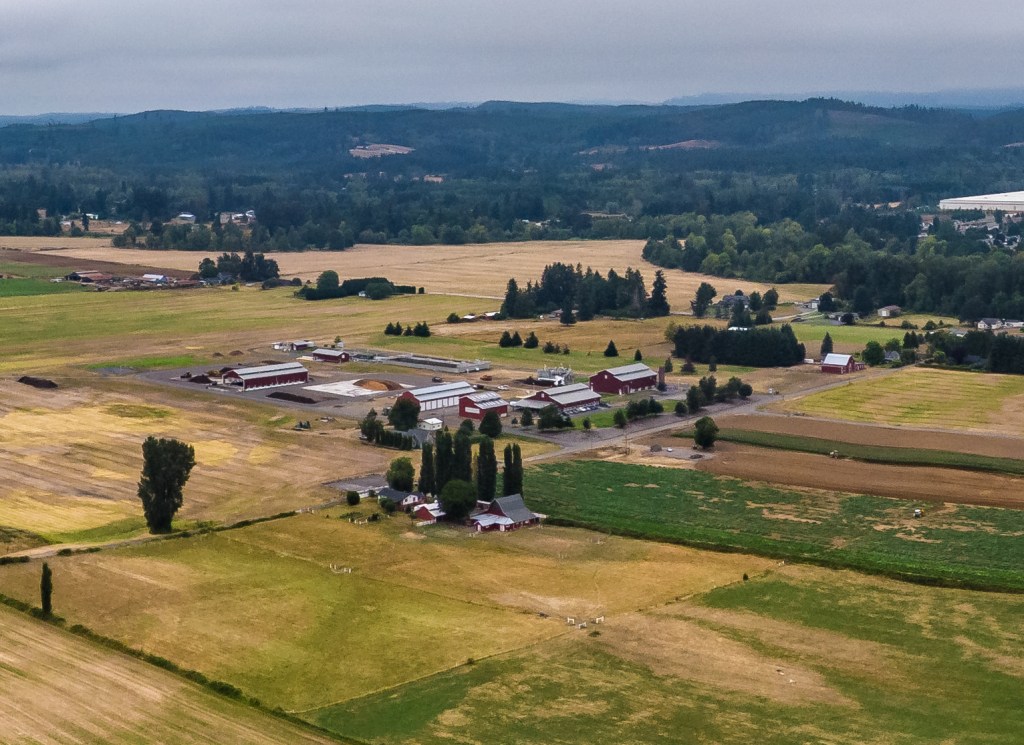
Hemp works well as a fallow crop or intercrop, restoring the soil and reducing the need for pesticides and herbicides. This means that potentially a considerable quantity of hemp could be grown on existing farmland without significantly displacing current crops. This would provide both plentiful and versatile raw materials, while also boosting the profits of farmers. Hemp can be used to produce practically any timber product (including structural timber), or can be used as an alternative to everything from cotton to plastic, and hemp seeds are rich in protein, making them an excellent source of nutrition. That versatility allows hemp to act as the basis of an economy that’s better able to adapt to fluctuating markets than the relatively limited and rigid timber industry.
That is excluding CBD and THC based products, which are already such a profitable business in Washington that they contribute half a billion dollars every year in tax revenue to the state. There’s plenty of room for further growth in that field, but the other many uses of the hemp plant have great untapped potential. It is a mistake to think of hemp as nothing more than the chemicals which can be derived with it.
This brings us to why hemp has not yet replaced wood, cotton, and other more traditional materials, and how there is an opportunity for WADNR to both facilitate widespread adoption of alternative hemp-based materials, and in so doing boost rural economies while reaping considerable profits for the both the agency and its beneficiaries.
Fundamentally, the issue is one of a missing supply chain. Farmers rushed into the hemp market post-legalization, but the processing, manufacturing, and consumer demand weren’t there at the time. WADNR is well positioned to facilitate the bootstrapping of the supply chain framework to support a thriving hemp industry in Washington. In the process, they stand to profit considerably as a key player in the industry.
The primary role which I believe WADNR should occupy is that of a hemp fiber processor; buying raw hemp from growers, using decorticators to separate the hurd and bast, and then selling the resulting products to manufacturers. Government action to construct and operate such an industrial hemp processing facility was among the key recommendations of a report conducted by Greene Economics under contract from WSDA, published June 2025.
Portland State University has also published an in-depth study on the economic potential of hemp, as well as factors such as carbon sequestration, and bioremediation. That study has a lot of great information on the topic, but for now let’s focus on its analysis of decorticator profitability. That study looked at a number of different decorticators, and found that Fibertrack 660 offers both the shortest path to profitability, and is most profitable over time. Depending on various factors, the Fibertrack 660 can be profitable in as little as half a year of processing hemp from 500 acres of farmland, and can make as much as $13.5 million in net revenue over a ten year period from that same land base. We can see that if we increase the amount of hemp being grown to 1000 acres, that the maximum net revenue increases to $28 million, showing that the profitability of hemp production increases with scale.
Processing the hemp is a key bottleneck, and an excellent opportunity for an alternative revenue source for WADNR, but we also need to address the rest of the supply chain. First, there is supporting growers. Hemp fiber requires specialized machinery to harvest efficiently, and so I propose that WADNR purchases a fleet of these specialized machines, such as the KP-4 hemp cutter, which would then be rented out to farmers. Testing of hemp to ensure it meets THC content limits is also a factor. WSDA handles this testing, but it is a fee-supported program, which is struggling due to logistical issues. It would be a good idea for WADNR to consider a pilot program to use its extensive and well-distributed work force to facilitate this testing. Possibly, temporary incentives should also be considered to bolster confidence among potential growers. Regionally adapted strains and seed stock are also an important problem to solve, one which USDA, WSDA, and WSU are working on solving. However, it should be noted that there are strains of hemp which are well adapted to areas with a similar climate to Washington State, such as ‘Carmagnola’ which is known to be well adapted to British Columbia.
Proper storage for hemp is also important, and so I suggest that WADNR provide storage capacity at the hemp processing facilities which it would operate. This leads us on to the next component of the supply chain, which is the manufacturers who will buy the processed hemp. While it is possible that WADNR could simply export processed hemp materials, I also see a golden opportunity here to facilitate tremendous economic growth in Washington State by bringing hemp product manufacturers here to Washington State. Current manufacturers in other states include Hempitecture, an Idaho based company manufacturing insulation from hemp, Hempwood from Kentucky who make a hemp-based wood-alternative which is stronger than hickory, Renewabuild in British Columbia manufactures structural hemp for building construction, and that is to name only a few of the companies currently producing exciting, innovative hemp products. If we offer the prospect of a high volume hemp processing industry here in Washington, it will be a strong incentive in itself for such companies to locate new facilities here.
With this in mind, WADNR could make this prospect even more tempting to manufacturers by investing in on-site facilities to rent out at low cost to prospective manufacturers. This would lower the financial barrier to such manufacturers, and speed business migration to Washington State. With WADNR as the primary hemp processor in the region, this and any other incentives offered would likely be easily recouped due to its key placement in the supply chain.
The last piece of the puzzle is a tricky one, and that is marketing hemp-based alternatives to consumers. Fortunately, hemp fiber products have already proven to be profitable in various applications, and the aforementioned PSU study found that across all the simulations they conducted, industrial hemp is likely to be profitable. The key to mass adoption of hemp-based alternatives to wood products, and indeed any of the various other products which hemp may be used to produce, is mass production to a degree where the price of hemp-based alternatives falls below that of traditional materials. Given the skyrocketing price of those traditional materials due to inflation, as well as the escalating economic and political turmoil, undercutting traditional materials which are largely dependant on international supply chains with a mass produced, highly efficient material such as hemp in an end-to-end regional supply chain offers a unique opportunity to boost hemp into the mainstream.
I’ll be the first to admit that there are major challenges on many levels with what I’m proposing here, but none are insurmountable, and the potential benefit to WADNR and its beneficiaries, to our economy, to our environment, and to state tax revenue are truly staggering if fully realized. A holistic industrial hemp program implemented at scale is certainly a major, multifaceted investment, but it’s one which could pay off in a big way in just a few short years. The level of growth in both the hemp-derived chemical industry, and to a lesser extent the industrial hemp industry, since legalization have been tremendous, and let’s not forget that those industries basically didn’t exist a decade ago.
We have an opportunity here to set aside our forests, which are worth more standing for the ecological, carbon sequestration, and recreation services they provide, while providing replacement revenue for WADNR and its beneficiaries, and kickstarting an economic boom in struggling rural regions of Washington State (and indeed throughout the state as a whole), all while helping to solve the state’s budget crisis through the additional tax revenue which would be generated.
Additional resources:
- Hemp for Building Materials: Marketing Opportunities and Challenges
Prepared for Washington State Department of Agriculture by Greene Economics
Published 6/30/2025
- Industrial Hemp – A review of economic potential, carbon sequestration, and bioremediation
An output of the Portland State Hemp Collaborative and the Institute of Sustainable Solutions at Portland State University.
- Hemp Materials Roadmap
Produced by the 2024 Hemp Industrial Materials Supply Chain Workshop, hosted by Oregon State University.
Q&A
Q: How much time would be required for a hemp processing facility to become profitable?
A: As little as 6 months, depending on various factors.
Q: Are there industrial hemp strains which grow well in Washington?
A: Yes, Carmagnolia is known to grow well in British Columbia, and the USDA, WSDA, along with WSU are conducting research to determine the best varieties to grow in Washington.
Q: Which areas of Washington are best suited to growing industrial hemp?
A: Eastern Washington is ideally suited to growing hemp to the stage where it flowers and produces seed, while Western Washington provides a favorable climate for hemp fiber production.
Q: Could WADNR grow hemp itself?
A: I recommend purchasing from private growers, but potentially WADNR could also grow the crop itself by leasing agricultural lands for the purpose. Strategically acquiring farmland could be used as a means to prevent ongoing loss of agricultural land in areas at risk of conversion via land acquisition. WADNR could prevent the loss of farms to development while also increasing revenue for itself and beneficiaries.
Q: Is hemp the same as cannabis?
A: Hemp and cannabis are the same species of plant, but industrial hemp strains contain 0.3% THC, meaning that it is not intoxicating.
Q: Is hemp better for paper products than wood?
A: Yes, hemp produces a superior product that is stronger and higher quality than typical wood-based paper, and has the added bonus of being hydrophobic. Additionally, hemp paper is typically produced mechanically, and doesn’t require the chemicals used in the production of wood-based paper. The company “Printed on hemp” which is based in Oregon, produces hemp-paper, which they say uses 45% less energy, produces 38% less greenhouse gasses, generates 45% less wastewater, and creates 50% solid waste than traditional wood paper.
Q: Are hemp-based wood alternatives fire resistant?
Yes. Many hemp-based materials such as hempcrete and hempwood are fire resistant. Hempwood for example has received an A Class 1 fire resistance rating, while hempcrete has been shown to withstand exposure to 1700 degree temperatures for an hour, achieving an R value of 2.2 per inch.
Pros & Cons
Pro: Hemp is an excellent fallow crop and intercrop, meaning that large quantities can be grown without displacing existing primary crops. Various parts of the hemp plant may also be used to replace a wide variety of products in addition to wood, from plastics and cotton, to animal feed and even artificial meat, making it a multi-purpose crop.
Pro: Hemp fiber is stronger and more durable than wood fiber, and has great potential to produce superior products to wood. For example, Hempwood, a small manufacturer located in Kentucky, produces an interior-grade wood alternative made from hemp that is 20% stronger than hickory. Renewabuild in Canada produces hemp blocks which are designed for structural use.
Pro: Hemp improves soil health, which when grown in rotation with other crops such as corn and potatoes results in increased yields of those crops.
Pro: Hemp sequesters carbon at a greater rate than wood, and a greater percentage of that carbon remains stored in hemp-based products than in traditional wood products.
Pro: Hemp grows at a faster rate than trees, and achieves this high rate of growth in the same year it is planted and harvested. Trees by contrast require around 80 years to reach maturity and the accompanying higher growth rates associated with older trees.
Con: There remains potential for primary crop displacement, and for the displacement of various fallow crops, leading to potential issues in the supply of certain goods. However, it is important to note that other crops can be more efficiently grown in vertical farms than hemp, and that there is significant growth in the vertical farming sector in Washington State – Lacey, WA is home to the largest vertical farm on the West Coast, and grocery stores such as QFC are beginning to integrate vertical farms into their establishments.
Con: The full extent of hemp’s capability as a wood alternative has not been realized due to limitations on production capacity. Because of this low output, prices of hemp-based wood-alternatives are high. It is important to note that with sufficient scale, hemp-based wood-alternative products have the potential to undercut traditional wood products on both performance and value. Considerable investment in bootstrapping the hemp supply chain is necessary to achieve this.
Con: Industrial hemp grows 15 to 20 feet tall, which means it can’t be planted where that may cause a hazard, such as close to the edge of roads. However, the shade this provides on the grounds prevents weeds from growing, reducing the need for artificial means of weed removal and suppression.
 Andy Zahn
Leave a comment