
Enhancing local and regional economies through expanded outdoor recreation opportunities
Outdoor recreation is among the most popular pastimes in Washington State, with the average Washingtonian spending an average of 56 days per year engaged in outdoor activities. As a result, our National Parks and remote wilderness areas have been overwhelmed by the demand for access to hiking and camping opportunities. Outdoor recreation supports over 200,000 jobs in Washington, and outdoor enthusiasts spend over $21 Billion each year.
It is apparent that access to outdoor recreation is a priority to the vast majority of Washingtonians, and that it is a key component of our state’s economy. However, it’s also clear that we are reaching the maximum capacity of our existing public lands to offer hiking and camping opportunities to everyone who wishes to partake in them. Another problem is that despite outdoor recreation being an immense economic driver, it is one which rural communities are ill-equipped to harness. Our existing high value recreation destinations are largely located in distant mountains, while our communities are located far from those destinations. This means that despite millions of Washingtonians and visitors from elsewhere in the U.S. and abroad travelling to our existing parks and other public lands, few will ever find reason to stop in rural communities along the way for much more than gas and snacks.

In order to bring the full potential economic benefits of outdoor recreation into our communities, and to simultaneously satisfy the pressing demand for outdoor recreation opportunities, we need new, large parks in close proximity to our rural communities. In fact, we need to ensure that wherever feasible, every single rural community in Washington gets a new park large enough to serve as a viable destination for outdoor recreation enthusiasts. Doing so is key to bridging the urband/rural divide.
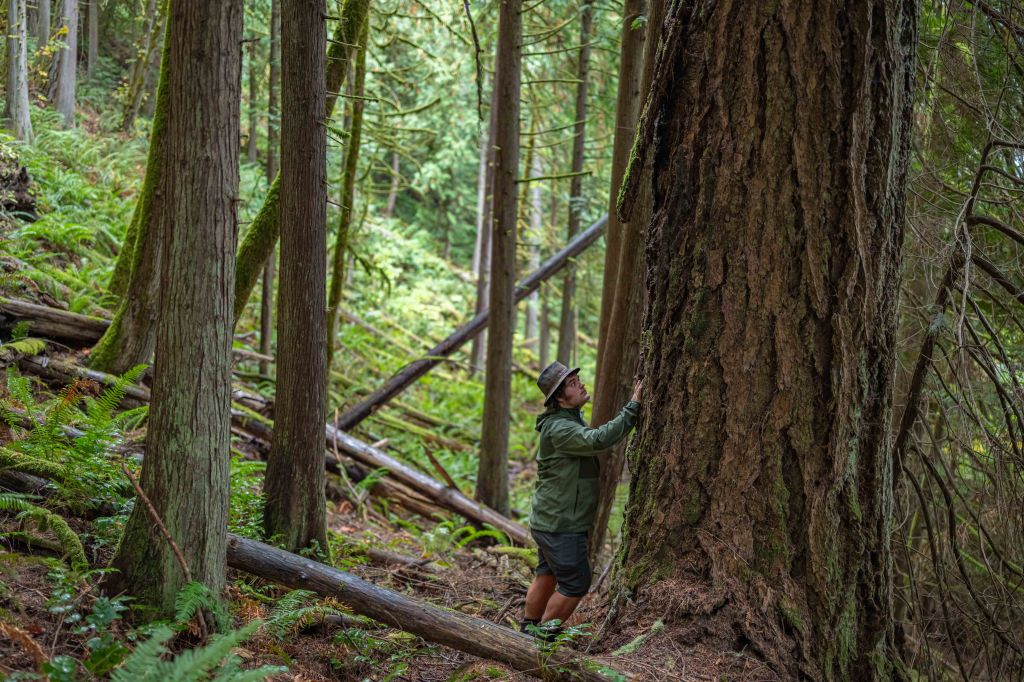
These new proposed parks need to meet a certain range of parameters in order to accomplish the intended impact. First of all, they need to be large enough to accommodate a large trail system, and provide visitors with the feeling of immersion in a wild environment. The minimum to accomplish such an experience is roughly 1000 acres, accommodating 5 miles of hiking trails and 5 miles of mountain biking trails. While the actual trail system of any given park will of course vary wildly, a good format to pursue is to have a ½ mile nature trail, a short 1½ mile hiking trail, and a long 3 mile hiking trail, with a 5 mile separate mountain bike trail running around the perimeter. This grants a range of experiences to accommodate different levels of fitness, personal choice of activity, and quantities of available time. Keeping hiking and biking trails separate serves to prevent user conflict, and to tailor trails to the preference of different user types.
A ratio of 1000 acres to 10 miles of trails is a good standard to follow, as it allows for both an immersive wilderness experience in most scenarios, and it also creates enough untravelled space that wildlife has human-free spaces in which to exist. It also serves to better contain a fully functional ecosystem, whereas a smaller area may suffer greater ill effects of activity outside its boundaries. A large area of intact natural ecosystems also serves to amplify ecosystem services to the surrounding region, such as moderation of wind, heat, drought, flood, and other environmental conditions.
These new parks would adopt a back-to-basics approach to their design, both to further enhance the wilderness experience, and to drastically reduce development and maintenance costs. Trails would be classic bootpaths and single track, similar to the rough and ready early days of hiking. While the rough outline of their path would be pre-determined, the actual route would be largely left to the judgement of volunteer trail builders. Maintenance would be similarly minimalistic and volunteer driven. Park facilities would consist of a small tent campground (3 to 5 sites), and a small picnic area (3 to 5 picnic tables), plus a pit toilet and a small trailhead parking lot. The end result would be that a park, once established, would be capable of existing long term with practically no funding beyond pit toilet maintenance.
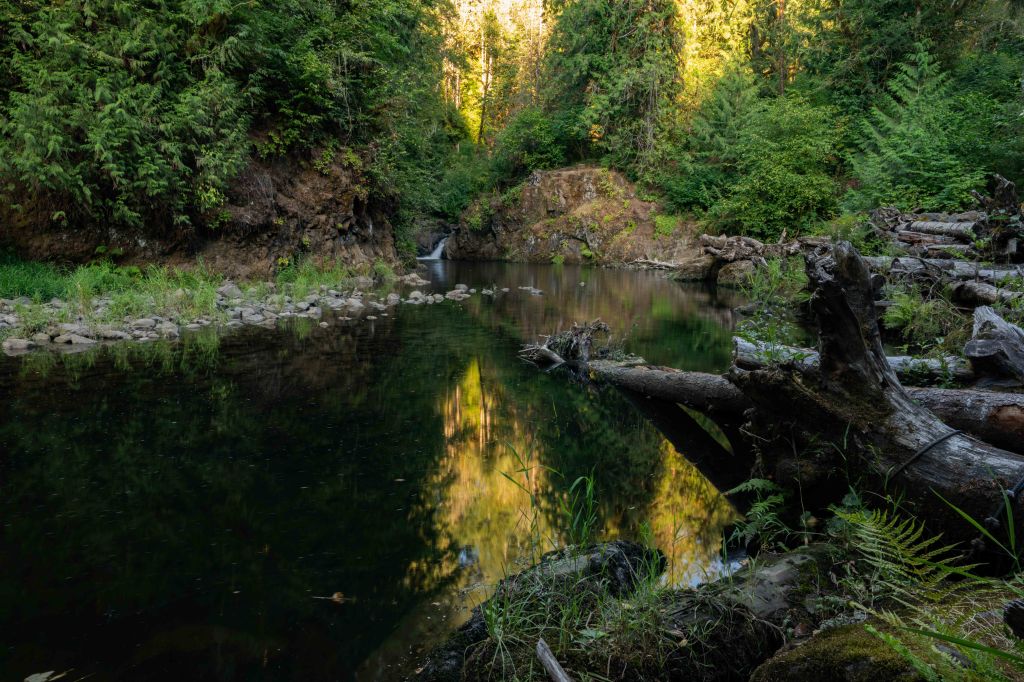
In addition to the cost savings inherent in this model, the community driven approach to park design and maintenance would serve to create a shared space and a point of pride to inspire a sense of place and belonging which is so often absent in our modern world. Moreover, in being a place where locals would frequent and urban travelers would make their destination, these parks would serve as a bridge between disparate communities and their varying cultures.
The large scale of this endeavor, to place a new, large park with significant outdoor recreation opportunities adjacent to every possible rural community, is necessary to achieve the desired result of a thriving and profitable tourism and outdoor recreation economy in rural communities. We need to show not only that you may visit one town and find extensive hiking and mountain biking opportunities, but that the next town over has another park to visit, and the one beside that. This transforms rural communities from places where one might merely drive through, or visit for a day’s outing, into destinations where people come to spend their vacations.
With this in mind, we should also look at the potential to create a number of larger backcountry parks in key portions of the state which would serve as marquee outdoors experiences. The Willapa Hills, Toutle Mountains, Silver Star/Washougal River/Siouxan region, South Hills, Capitol Hills, the foothills of the North and Central Cascades, and the lumpy rainforests of the Western Olympic Peninsula, all possess places which, with a little restoration could become as desirable as any of our National Parks and forests. Larger protected areas in currently out-of-the-way areas would draw in visitors, and thus increase commerce in otherwise neglected communities.
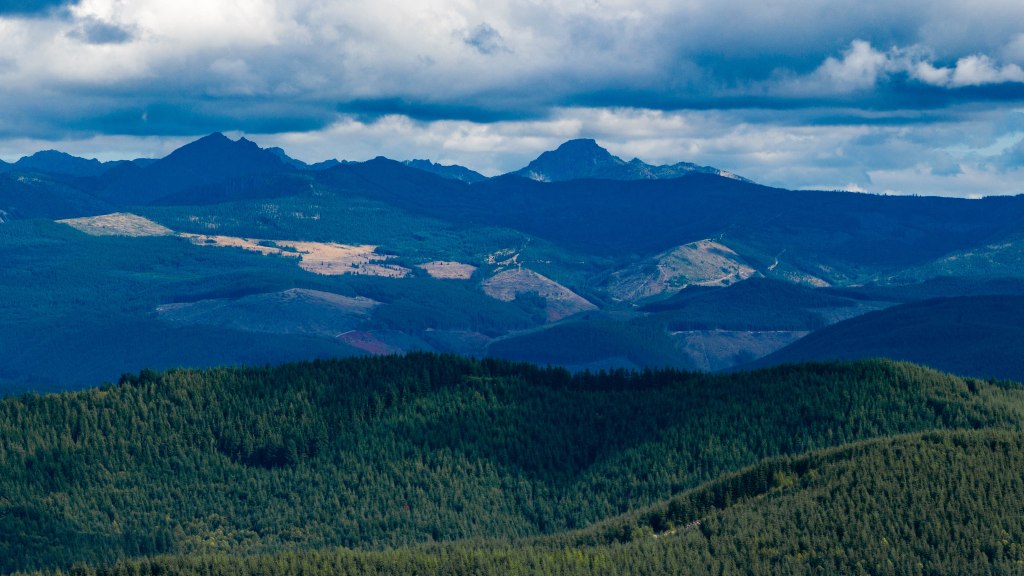
In order to expedite the process of creating vibrant ecosystems, and in so doing advance the goal of supporting rural economies by creating more attractive landscapes to visit, restoration of landscapes previously abused by industrial exploitation will be necessary in many cases, to varying extents. For example, low-diversity timber plantations would need to be thinned to allow for a greater variety of species to take root. It would be beneficial to reintroduce species which have been excluded from these plantations, such as aspen, birch, maple, and other species of trees and shrubs which were once common in the region. It may also be beneficial to plant species which are likely to be more resilient to our changing climate, such as redwoods which were once native in Western Washington, and which grow well here now. They are resilient to fire, disease, and infestation, and are ecologically compatible with the Pacific Northwest.
Restoration of damaged landscapes can be tailored to enhance the visual appeal to tourists and outdoor recreation participants. Native deciduous species put on a spectacular display in the fall, while Western Red Cedars, Big Leaf Maple, and Black Cottonwoods quickly form trunks of relatively impressive diameter (Sequoia are also excellent in this regard). Strategic replanting for purposes of recreation with these factors in mind can accelerate the aesthetic appearance of forests and boost seasonal visitation. It’s important to note that park locations should be selected to maximize their pre-existing ecological and scenic value, and that healthy natural ecosystems should remain intact and untouched.
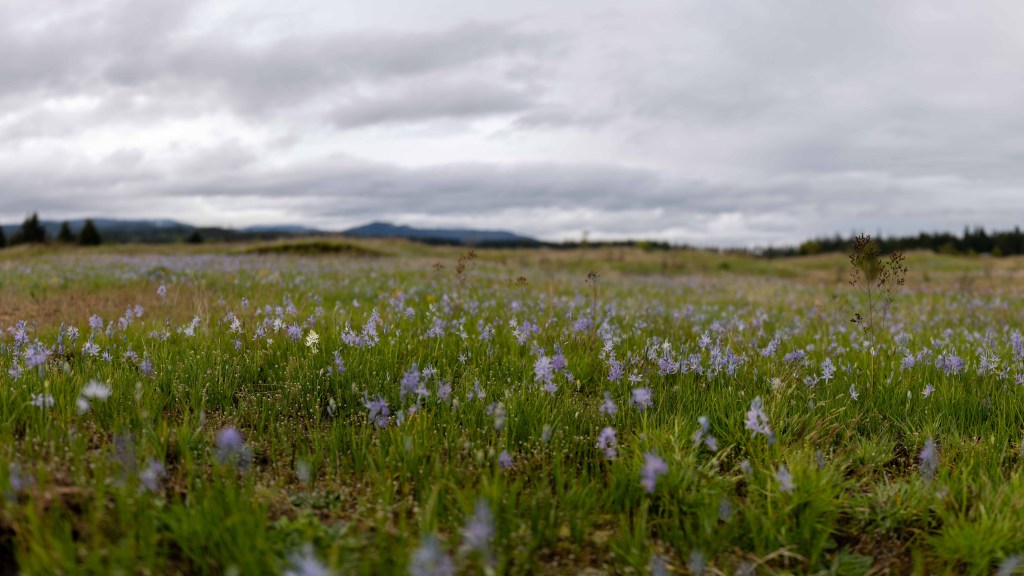
A further tactic to combine restoration with recreational optimization is to implement native meadows and oak prairies in place of areas which were recently clearcut prior to acquisition. Such meadow and prairie ecosystems are among the most endangered in Washington State, as most have been ploughed up for farming or paved over by suburban sprawl. By locating new meadows and prairies strategically in previously clearcut spaces, we can work to restore this imperiled ecosystem. Selectively choosing sites which have particularly high scenic value would serve to create attractive hiking destinations. As with trees which provide spectacular fall colors, the spring flowers inherent in meadow and prairie ecosystems would provide another seasonal attraction outside of the traditional high traffic summer season.
The potential for boosting visitation in rural communities outside of the typical tourist season represented by fall colors and spring flowers highlights a major advantage of creating new parks for expanded recreation opportunities in rural areas. For the most part, these areas are snow-free year-round, and thus would be accessible even in the midst of winter. To further expand year-round appeal of these parks, artificial replications of natural rock formations could be located strategically as trail destinations, utilizing preexisting disturbances. For example, hoodoos could be carved into former quarries, and even stone arches could be constructed, with such alterations being reasonably low cost and long lasting, with very little negative environmental impact, particularly given the high level of disturbance which the landscapes in question have already undergone. It is similar in concept to the art walk at the Cutthroat Climb trail in Willapa National Wildlife Refuge, where numerous art installations are located in a recovering forest ecosystem. This has proved to be one of the most popular attractions at the refuge, and it serves as an excellent proof of concept.
The most important step, however, is that the land for these new parks be acquired and protected. Even without alteration or development of any kind, public land will attract visitors, and even heavily degraded lands will recover on their own, given time. The improvements suggested here are proposed as a means to rapidly achieve the desired results of a rural park program. While the cost of the proposed restoration measures and recreation facility construction have been considered specifically to keep costs down while maximizing the visitor appeal and ecological value of these parks, it must be stressed that funding the acquisition of the land itself is paramount.
Everyone loves parks, most Americans support conservation and participate in outdoor recreation. Protecting land in rural areas of Washington State offers perhaps the greatest opportunity for economic diversification in our communities here, and it will drastically improve not only the viability of struggling rural towns, but also make them much better places to live.
Additional Resources
- Economic Analysis of Recreation in Washington State: https://rco.wa.gov/wp-content/uploads/2020/07/EconomicReportOutdoorRecreation2020.pdf
- Defenders of Wildlife poll conducted by Real Clear Politics on public support for conservation issues: https://defenders.org/newsroom/new-defenders-poll-shows-american-public-overwhelmingly-supports-endangered-species-act
- Poll conducted by the Nature Conservancy establishing broad support for conservation regardless of political affiliation: https://conservationtools-production.s3.amazonaws.com/library_item_files/1205/1098/TNC_National_Poll.pdf?X-Amz-Algorithm=AWS4-HMAC-SHA256&X-Amz-Credential=AKIAIQFJLILYGVDR4AMQ%2F20251105%2Fus-east-1%2Fs3%2Faws4_request&X-Amz-Date=20251105T182444Z&X-Amz-Expires=3600&X-Amz-SignedHeaders=host&X-Amz-Signature=9aebfe214d9361ea59a41d3074f2e27da33aadd2d3a0bb312f25ad4634569865
- Study documenting the positive impact of outdoor recreation in rural economies in Appalachia (a region for which there are applicable parallels in rural areas of the Pacific Northwest): https://www.scienceimpactpub.com/journals/index.php/jei/article/view/173
- Study documenting the health benefits of parks: https://www.tpl.org/wp-content/uploads/2023/05/The-Power-of-Parks-to-Promote-Health-A-Trust-for-Public-Land-Special-Report.pdf
- National Park and Recreation Association fact sheet: https://www.nrpa.org/contentassets/9c491783f73a45f89abb0443b1a3e977/parks-improved-mental-health-quality-life.pdf
- A Study on the Impact of Public Parks on Community Health: https://journals.sagepub.com/doi/10.1177/10793739241277600
- The Economic Impact of ParksAn Examination of the Fiscal Effects of Operations and Capital Spending by Local Park and Recreation Agencies on the U.S. Economy https://www.nrpa.org/contentassets/f568e0ca499743a08148e3593c860fc5/2023-economic-impact-report.pdf
Q&A
Q: How long would it take for a new park to deliver economic benefits to a community?
A: This would vary based on the land in question and how quickly a trail system could be established. Some parks would require little in the way of environmental restoration, while others would require some years to mature following the long term exploitation which many landscapes here in the Pacific Northwest have endured. Once trails, picnic areas, and tent sites are established, visitation should grow quickly. This process may be accelerated through programs to expand the visibility of new parks.
Q: How many communities would get new parks?
A: I have identified around 280 communities which would be suitable for this proposed program, with the vast majority located in Western Washington. This is due to major geographical differences between Western and Eastern Washington.
Q: How many acres would be protected?
A: I envision this program as seeking to protect a total of 500,000 acres. With a target of a minimum of 1000 acres per community, and around 280 communities to receive new parks, that works out to about 300,000 acres of new parks in close proximity to eligible communities. The further 200,000 acres would include the larger major destination parks, such as the Toutle Mountains.
Q: How many miles of trails would be constructed?
A: With a suggested minimum of 5 miles of hiking trails and 5 miles of bike trails per park, and accounting for considerably more extensive trail networks in larger parks, this program would aim to build 3,000 miles of new trail in Washington State.
Q: How many campsites would be built?
A: with 3-5 tent campsites per park, and more for larger destination parks, the goal would be to add between 1000 and 1500 campsites across Western Washington State.
Q: How much would this program cost?
A: Calculating the total cost of this program is difficult, as the cost of acreage varies from location to location, and is prone to fluctuation. Many of the larger destination parks described here occur on state owned land, and so with legislative action could be transferred into the NRCA program at little to no cost to the state. I would recommend allocating an acquisition budget of between $2.5 billion and $3 billion. It is worth noting that these figures are assuming current prices, but given the high likelihood of decline in real-estate prices, this total investment necessary could be far lower. Basic development and maintenance would be relatively minor, with each park only likely to cost a few thousand dollars to initially develop, with the rustic facilities needing very little in the way of oversight or annual maintenance. At a rough estimate, development would cost in total perhaps one or two million dollars, while annual oversight and maintenance would likely only cost a few hundred thousand for the entire park system.
Pros & Cons
Pro: Would bring significant, long term economic benefits to struggling rural communities.
Pro: Benefits to physical and mental health in rural communities.
Pro: Reduced pressure on overcrowded parks and other public lands.
Con: Would require a significant upfront investment, though this would be offset by the long term economic benefits of the program.
Pro: Provides a much needed increase in the number of available campsites.
Con: A significant amount of time would be required for the benefits of this program to reach their full potential. It would be an investment in our future.
Pro: Protects and restores ecosystems, providing a significant boost to ecosystem services on a local and regional scale (reduced fire/flood danger, moderated wind, heat, and drought, clean air and water, etc.)
Pro: A dramatic increase in wildlife habitat and the preservation of wildlife corridors.
 Andy Zahn
Leave a comment