The cost of living in Washington State is a constant concern to the millions of people living here, and it is imperative that we work to address this multifaceted crisis. Fortunately, there are a few key steps our state government can take to swiftly make this a more affordable place to live. Perhaps the single largest aspect of affordability which I hope to address is transportation.
According to AAA, owning and operating a car costs Americans an average of $12,297 per year. That’s $1,025 that the average American is spending each month just to get around. That’s about half the cost of the average price of rent in Washington State (which itself is a huge problem which we will discuss later on). The cost of owning and operating a vehicle is mandatory for most people living in Washington State. Very few people live in circumstances which would permit them to get to and from work and access all the necessities they require without the aid of an automobile.

This means that even though minimum wage is a laudable $17.13 per hour in Washington State in 2026, if you work full time at that rate and earn around $35,000 per year, about a third of your wages are likely going just to pay for the thing you need to get you to and from your job. Even for those making the state average wage of $99,810 per year, about 12% of their wages is eaten up by owning and operating a car. By comparison, transportation costs the average person in Japan about $1239 per year, thanks to their robust public transit network.
Essentially, by making our communities car dependent, we increase the minimum cost of transportation ten-fold compared to a car-optional system with a robust public transit network. By building a robust and comprehensive public transit network in Washington, we can potentially cut the cost of transportation by 90% for Washingtonians, which is equivalent to handing out a 9% raise to everyone. What’s more, since transportation costs disproportionately affect lower income earners, making car ownership optional would grant financial relief to those who need it most. Someone making minimum wage would be looking at the equivalent of around a 27% raise as a result of access to public transportation.
It is clear that investing in public transit is vital, and a key component of improving the affordability of living in Washington State. The question is how do we go about acting on this obvious and urgent need.
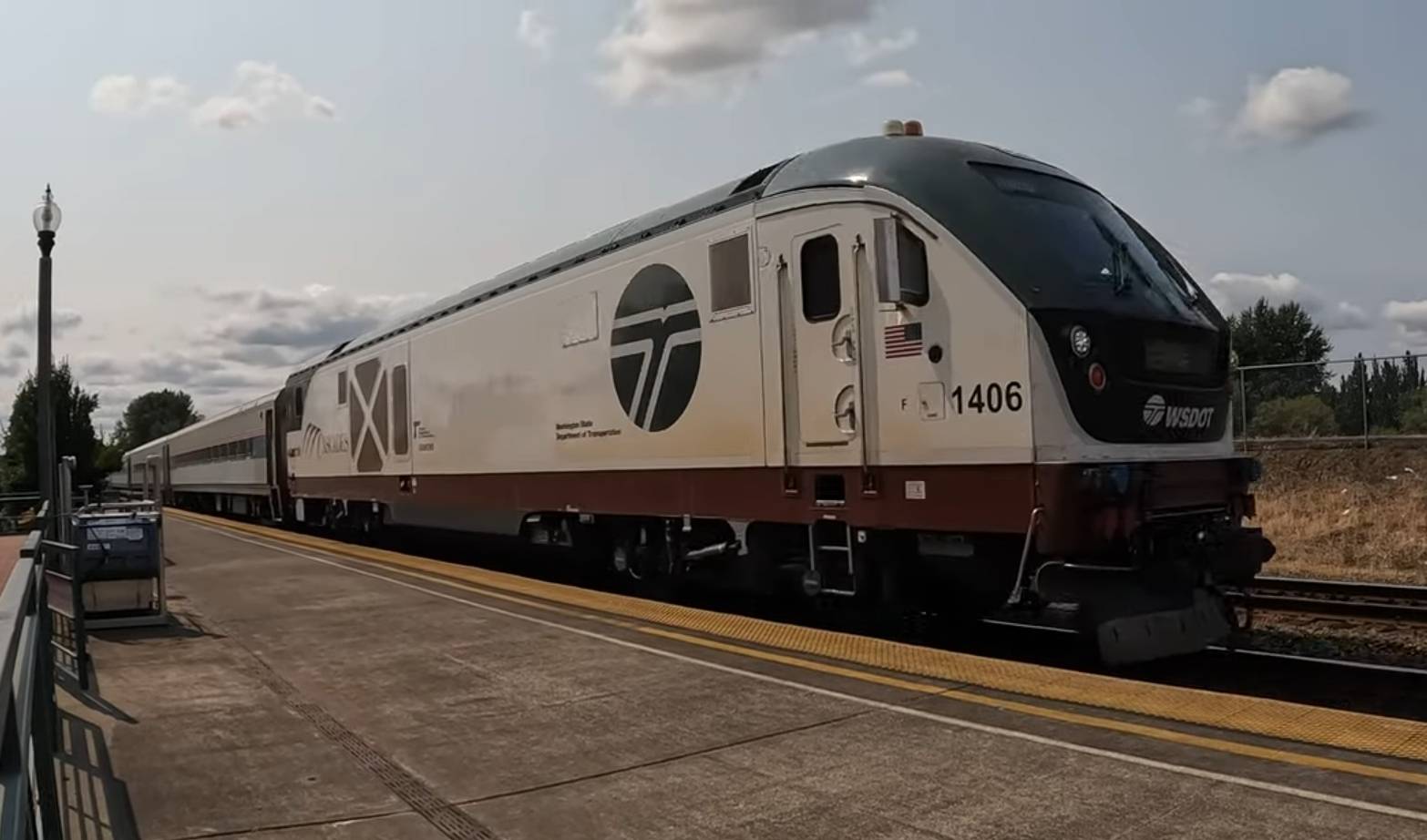
The first step is to make the best use of the infrastructure we already have – specifically what remains of our rail network. Currently, very few of Washington’s rail lines are utilized by passenger trains, and those that are used have sparse schedules, high ticket prices, and run on decrepit rails. We need to establish a publicly owned and operated rail service in Washington State, starting with a fleet of six new passenger trains on the I-5 corridor between Tacoma and Portland. This would enable hourly service North and South along this line, while keeping ticket prices to a minimum. We would also need to implement improvements to this line. Upgrading rails, and building passing zones to accommodate the increased traffic. Additionally, we need train stations in every small town along the I-5 corridor. Ridgefield, Woodland, Kalama, Castle Rock, Winlock, Napavine, Chehalis, Bucoda, and Tenino should all have their own train station with hourly service.

We also need to restore the partially disused railroad between Tacoma and Morton, enabling both locals and tourists to travel between the city and remote mountain towns. More trains are also clearly needed between Seattle and Spokane, and passenger rail service should be added to various freight rail lines throughout the state. It’s worth noting here that the demand for such service is clearly there. Amtrak trains are booked long in advance, despite their limited service and high cost. Lower costs and better service would undoubtedly correlate with an increase in demand.
Of course, our rail network is much diminished from its historical extent, and building new rail lines would be an extremely long term goal, outside of the scope of what is possible today. This means that for rural communities outside of the reach of our existing rail network, much expanded bus service is likely the best option. Within cities and towns, we need to work to build and rebuild electric streetcar networks. Such networks existed on a large scale throughout the region in the early 20th century, and they represent the most efficient and least expensive option for mass transit in towns and cities now.

An extensive and robust public transit network capable of moving a significant percentage of daily travelers would greatly reduce the burden on our streets and highways, helping to reduce road maintenance costs. Long term, the significant investment to build out public transit would pay for itself in the annual costs shouldered by the agencies tasked with maintenance of transportation infrastructure.
It’s also worth noting the impact which availability of affordable transit has on combatting homelessness. When a car is required to hold down a job, we are faced by a society where all too many of our citizens are one accident or missed payment away from losing their job and ending up on the streets. A car optional society is a society with greatly reduced homelessness; it provides a safety net for the most vulnerable people. From a purely economic and financial perspective, this greatly reduces the financial burden which large scale homelessness possesses.

Beyond mechanized transportation, we must also consider the benefits of making our communities more cohesive and walkable. We should be implementing measures to enable more people to walk to work, or to the necessities they require in their daily lives. This not only further reduces the minimum cost of living, but also greatly benefits small businesses, particularly if care is given to enable mixed commercial/residential areas to exist in our towns and cities.
Add in the obvious and significant environmental benefits of public transit and walkable communities to the economic boost it provides, the reduced costs of upkeep to the government (and thus to taxpayers), and all the other benefits of a car-optional society, and the we see that in fact we can’t afford not to invest in public transit.
Leave a Reply